Blizzard Drops Up To 3 Feet Of Snow Across Parts Of Northeast
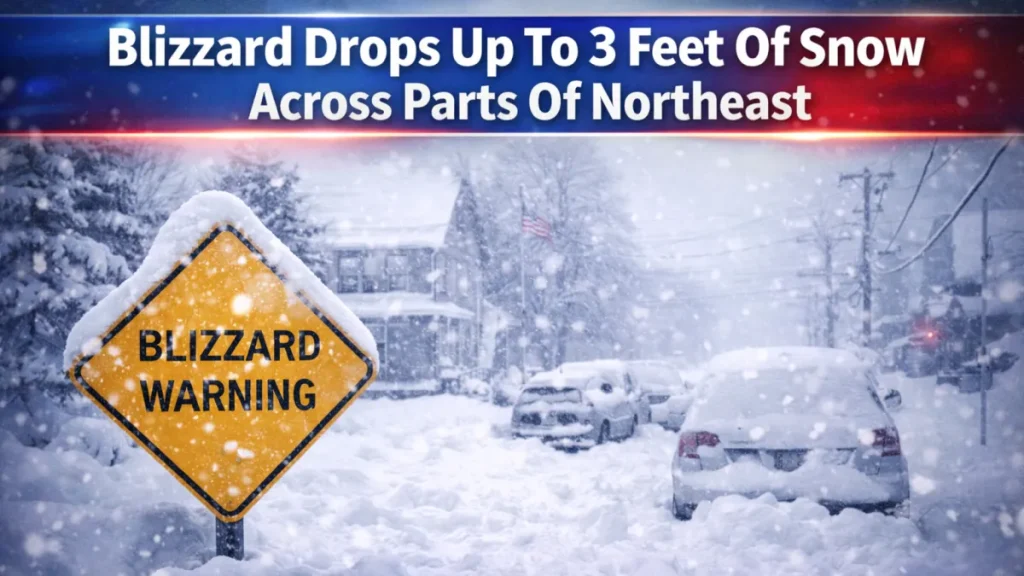
A record-breaking blizzard blanketed parts of the Northeast with heavy snow totals that reached up to 3 feet in some areas, leaving major cities and small towns digging out as the storm began to ease.
The powerful winter system slammed the region from the mid-Atlantic into New England, bringing intense snowfall, strong winds and whiteout conditions that made travel difficult to impossible in many places. Major metropolitan areas including New York City, parts of New Jersey and Boston saw significant accumulation as plows and road crews worked to clear main arteries and neighborhood streets.
Across the region, the storm disrupted daily life and strained transportation networks. Travel was halted or severely limited in many areas, with conditions described as “near impossible” in parts of New York as the blizzard intensified. Airports and roadways faced widespread disruptions as visibility dropped and snow piled up faster than crews could clear it.
Power outages were also reported as the storm moved through, with wind and heavy snow contributing to downed lines and service interruptions. Emergency officials in multiple states urged residents to stay off roads while crews worked to restore power and clear routes for emergency vehicles.
In Massachusetts, Gov. Maura Healey announced a travel ban for parts of the state as the blizzard dumped snow totals approaching three feet in some communities. The ban underscored the severity of conditions in New England, where coastal winds and sustained snowfall combined to create prolonged hazardous travel.
The storm’s impact matters because it hit densely populated corridors where even moderate snow can cripple transit systems, emergency response times and supply chains. With totals measured in feet in some places, the cleanup is expected to take time, affecting commutes, school schedules and municipal services even after the last bands of snow have moved on.
City and state agencies shifted from storm response to recovery, focusing on clearing highways first, then secondary roads and residential streets. Officials also emphasized access for ambulances, fire crews and utility workers, while residents began shoveling sidewalks and digging out vehicles buried by plow berms and drifted snow.
What happens next will depend on local conditions and the pace of cleanup. Municipal leaders are expected to continue issuing updates on road restrictions, public transit service and any ongoing power restoration efforts. Residents in harder-hit areas may face extended delays as crews work through snowbanks and widen narrow streets for safer travel.
As the Northeast emerges from the blizzard, the immediate focus is on clearing streets, restoring full service and returning daily routines to normal after a storm that buried communities in historic snow.