OpenAI Flagged Teen’s Chat Activity Before Mass Shooting
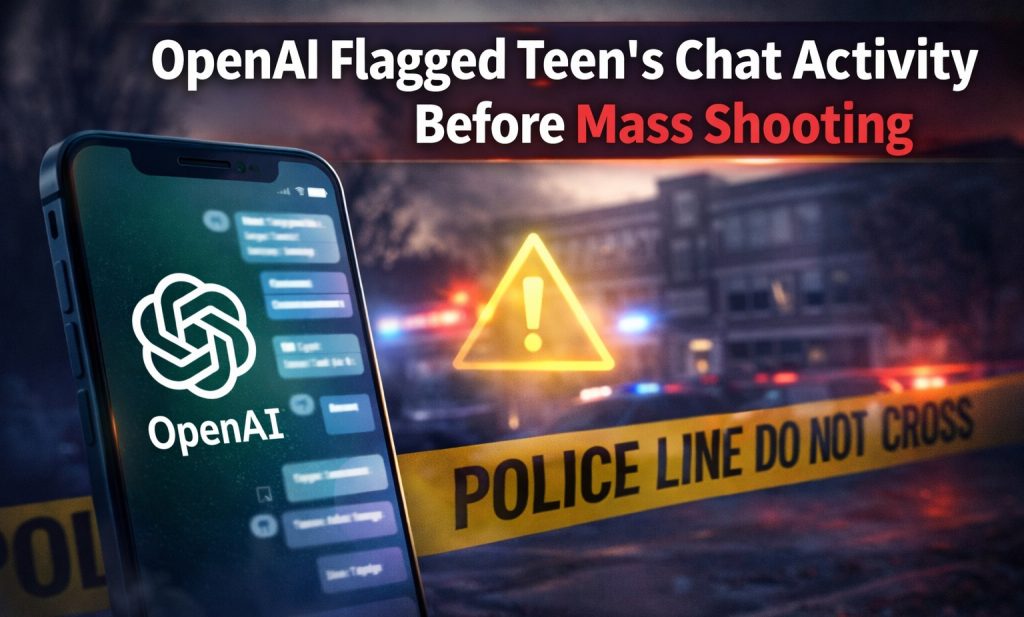
OpenAI internally flagged a teenager’s ChatGPT activity months before a mass shooting in Tumbler Ridge, British Columbia, according to multiple news reports, and later banned the account linked to the suspect.
The case has drawn attention in Canada and beyond after reports said the suspect used ChatGPT before the attack. Coverage from CBC and other outlets said OpenAI identified concerning messages tied to the teen well ahead of the shooting and took enforcement action against the account. Additional reporting described employees raising alarms internally about the activity months before the tragedy.
The shooting occurred in Tumbler Ridge, a community in northeastern British Columbia. The suspect has been described in published reports as a teen. Those accounts also say the suspect’s use of ChatGPT became part of the investigation and public discussion after the attack. OpenAI’s account action, as reported, included banning the suspect’s account.
Bloomberg reported that Canadian officials have summoned OpenAI executives in connection with the case. The reports indicate the focus is on what OpenAI knew from the flagged activity and what steps the company took before the shooting, as well as how information about concerning use is handled and communicated.
The development matters because it places the responsibilities of major AI companies under renewed scrutiny, particularly around safety systems designed to detect harmful intent and the protocols that follow when activity is flagged. It also raises questions for lawmakers and regulators about how platforms should coordinate with authorities when credible threats are detected, and what limits exist around user privacy and disclosure.
The reporting also spotlights a broader issue: AI tools are widely available, and how they are used can become central in the aftermath of violent incidents. When a company identifies dangerous behavior in advance, its decisions on enforcement, escalation, and documentation can become part of public accountability and government oversight.
What happens next will likely include more formal engagement between OpenAI and Canadian authorities. Officials are expected to press for details about the timeline of internal flags, what actions were taken, and what policies governed those actions at the time. The case could also intensify calls for clearer standards on when platforms must alert law enforcement, and what kind of evidence or threshold is required.
OpenAI has faced repeated questions in recent months about how it addresses misuse of its products. This incident, and the fact that internal warnings were reportedly raised long before the shooting, is now shaping a high-stakes discussion about safety controls, corporate obligations, and the real-world consequences of online tools.
Canadian officials’ review of the case is expected to keep the company’s handling of flagged activity in the spotlight in the days ahead.