Russia Warns Of Escalation After Massive Ukraine Drone Strike
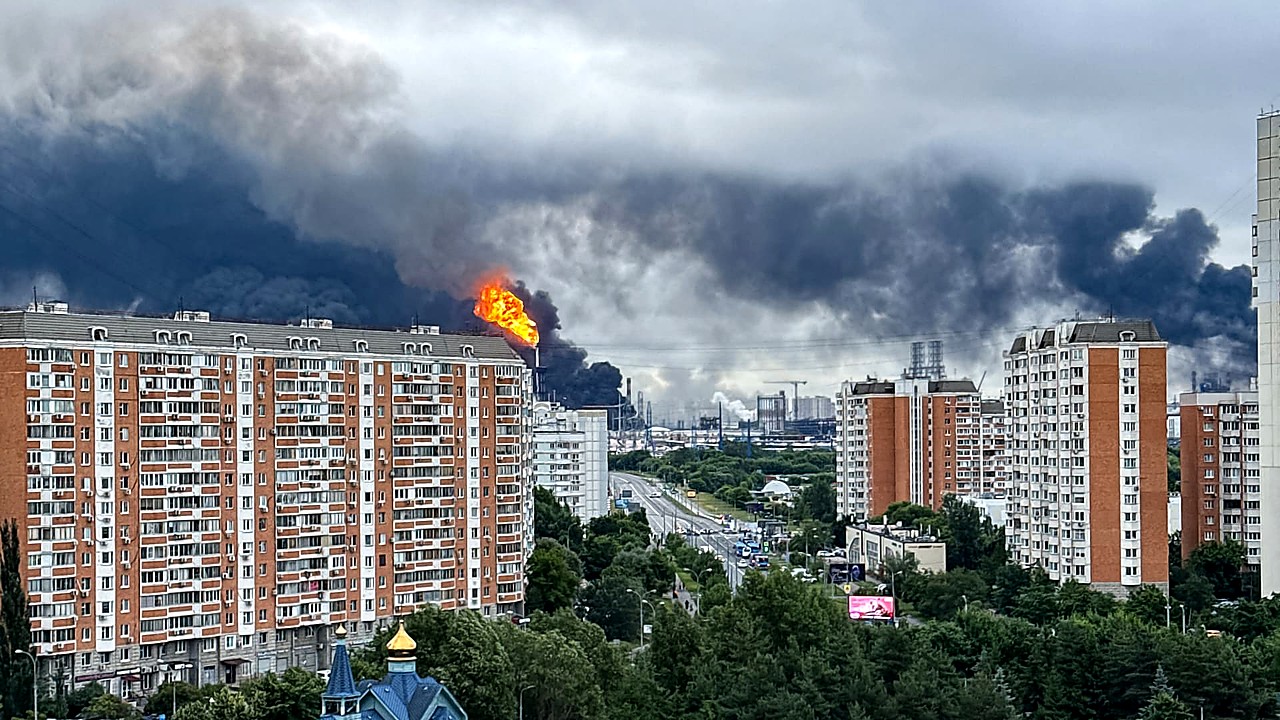
Russia warned of escalation after Ukraine carried out what was described as the largest drone attack ever to hit Moscow, targeting sites in and around the Russian capital and prompting renewed threats of retaliation from the Kremlin.
The attack unfolded as part of the broader war that began with Russia’s full-scale invasion of Ukraine and has increasingly included strikes far from the front lines. Russian officials said air defenses were activated around Moscow during the assault. The incident added to a pattern of drone warfare that has expanded the conflict’s reach, raising the stakes for both capitals.
Reports tied to the latest developments indicated a Moscow refinery was among the targets struck. Ukrainian messaging around the attack included a warning that “Moscow will burn,” underscoring Kyiv’s stated intent to bring the war’s consequences to Russia’s territory after months of missile and drone strikes on Ukrainian cities and infrastructure.
Russian President Vladimir Putin warned of “massive” retaliation in response to the refinery attack, according to related coverage. Russian statements framed the strikes on Moscow as a direct provocation and suggested the country could respond with intensified operations, widening the scope and scale of its attacks.
The development matters because it highlights how the conflict is evolving into a contest of long-range capabilities and air defenses, with both sides seeking to impose costs beyond the battlefield. Strikes on energy-related sites carry additional weight because of their potential impact on fuel supply, industrial operations, and public confidence, even when damage is limited.
It also increases pressure on civilian airspace and critical infrastructure around major population centers. Drone attacks in and around Moscow have repeatedly forced heightened security measures and placed a spotlight on the balance between Russia’s internal defenses and Ukraine’s ability to penetrate them.
For Ukraine, long-range attacks can serve as a way to challenge Russia’s sense of security and to target facilities viewed as supporting the war effort. For Russia, threats of escalation signal an effort to deter further strikes and to project resolve at a moment when the conflict remains entrenched and costly.
What happens next will depend on Russia’s response and on whether Ukraine continues to pursue strikes against targets in and near Moscow. Russian officials have indicated retaliation is coming, while Kyiv has shown a willingness to keep pressing its campaign against sites it views as legitimate military or strategic targets inside Russia.
The coming days are likely to bring heightened air-defense activity, additional security measures around key infrastructure, and close monitoring of any further attacks on major cities. With both sides escalating their use of drones and long-range strikes, the conflict’s risks are increasingly spilling beyond traditional battle zones.
The latest exchange leaves little doubt that the war’s front lines are no longer confined to eastern and southern Ukraine, and that the fight is now being carried directly to the heart of Russia’s capital region.