Trump Asks Judge Aileen Cannon To Delay Classified Trial
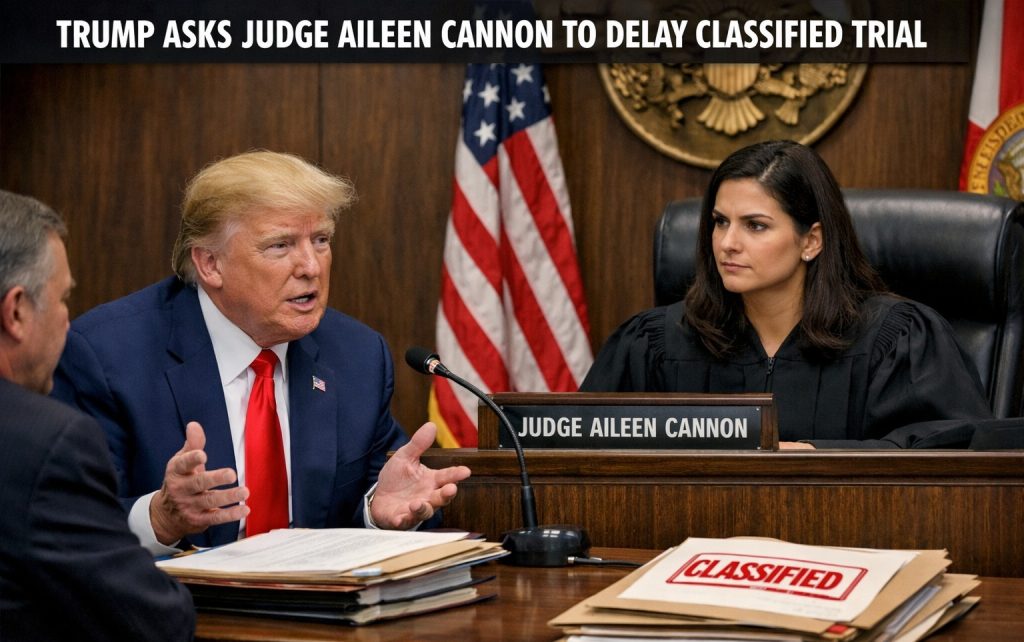
A federal judge has permanently blocked the public release of a special counsel report related to former President Donald Trump’s handling of classified documents, according to multiple news reports.
U.S. District Judge Aileen Cannon, a Trump appointee who oversaw the classified-documents case in federal court in Florida, issued the order barring the release of the report prepared by special counsel Jack Smith. The decision also imposes secrecy requirements governing the report’s handling, as first detailed in recent coverage by outlets including CBS News, CNN, NBC News, Politico, CNBC, USA Today and The Washington Post.
The report at issue concerns Smith’s investigation into Trump’s handling of classified materials. Cannon’s ruling means the document will not be made public, blocking a step that would have placed the special counsel’s account, findings and conclusions into the public record.
The order is a significant development in a case that has carried major legal and political stakes. A public report from a special counsel can shape how the public understands an investigation’s scope, what evidence was gathered and how investigators evaluated potential violations. By preventing the report’s release, the court has cut off a central avenue for broader disclosure about the classified-documents investigation.
Cannon’s action also underscores the continuing role of the judiciary in determining what information from high-profile federal investigations becomes public. Even after prosecutors complete their work, courts can restrict dissemination of investigative materials, particularly when they implicate sensitive issues and ongoing legal processes.
The ruling arrives amid intense national attention on Trump’s legal exposure and the handling of sensitive government information. The decision ensures that whatever narrative the special counsel report contains will remain out of public view, at least under the terms of Cannon’s order.
What happens next will depend on how the Justice Department and other parties respond to the ruling, including whether they seek to challenge it through further litigation. Any change to the report’s status would require new court action or a higher court’s intervention.
For now, Cannon’s decision stands as a definitive barrier to public access to the special counsel’s written account of the classified-documents case, keeping the report sealed and out of reach of voters and the broader public.