Meta Strikes AI Chip Deal With AMD After Nvidia GPU Pledge
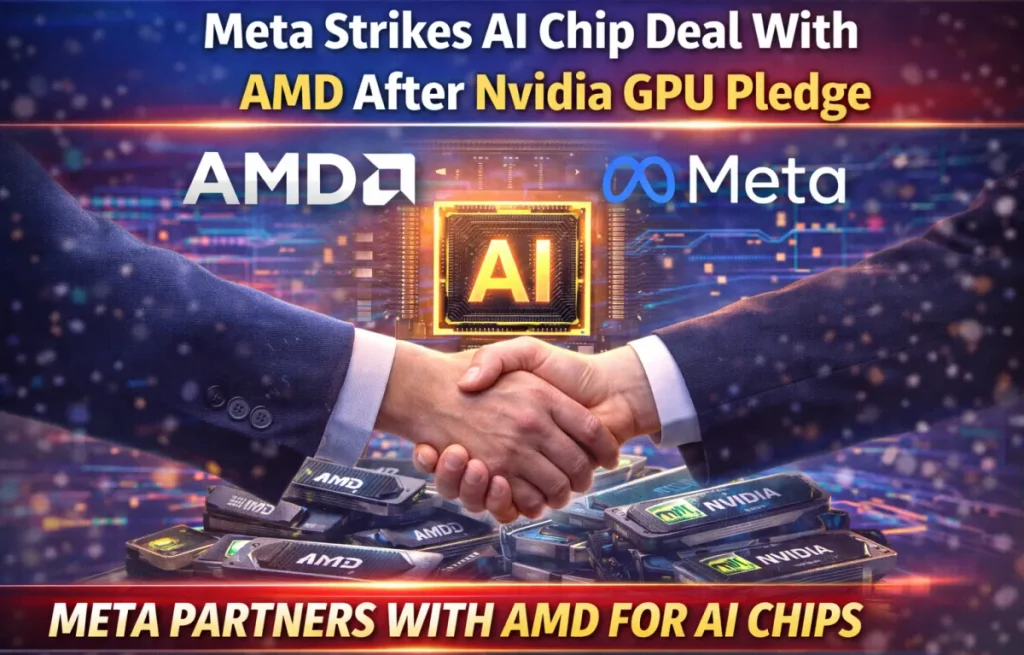
Meta has reached a deal with AMD to supply artificial intelligence chips, a move that comes just days after the company said it plans to deploy millions of Nvidia GPUs as it builds out its AI computing capacity.
The development adds AMD to a hardware lineup that already heavily features Nvidia, the dominant supplier of AI-focused graphics processors used to train and run large-scale models. Meta, the parent company of Facebook, Instagram and WhatsApp, has been expanding its data center infrastructure to support AI products and internal research.
CNBC reported the AMD agreement in a headline describing the deal as an AI chip arrangement that follows Meta’s recent public commitment to deploy millions of Nvidia GPUs. The sequence underscores that Meta is continuing to broaden its access to advanced compute hardware rather than relying on a single supplier as it scales.
Meta has not detailed in the provided context which specific AMD chips are involved, the expected volumes, or the timing of deliveries. The context also does not include financial terms, contract duration, or where the chips would be deployed. What is clear from the reported headlines is that Meta is pursuing both AMD and Nvidia in close succession as it increases capacity for AI workloads.
This matters because AI systems require enormous computing resources, and the ability to secure enough chips can determine how quickly a company can train new models, roll out features, and keep up with competitors. For big technology firms, chip procurement has become a core operational concern, closely tied to product road maps and data center planning.
It also matters for the semiconductor industry. Nvidia has built a commanding position in AI compute, while AMD has been working to expand its footprint in the same market. Meta’s move signals that a major buyer is willing to incorporate multiple suppliers as it builds out AI infrastructure, a dynamic that can shape competitive positioning and production planning across the chip sector.
Separately, a headline from AOL.com framed Meta’s move as “excellent news for Nvidia,” pointing to the fact that the AMD deal arrived after Meta’s commitment to deploy millions of Nvidia GPUs. That sequence suggests Nvidia remains central to Meta’s AI buildout even as Meta adds alternative sources of supply.
Another headline, from Coindoo, characterized the AMD agreement as a “$100B” deal with a potential “10% stake.” Those specific figures and any investment structure are not confirmed in the provided context beyond that headline wording, and no additional verified details are included here.
Next, investors and industry watchers will look for more concrete disclosures from Meta and AMD, including the exact products involved, rollout timelines, and how the arrangement fits into Meta’s broader AI data center expansion. Additional details could emerge in company statements, regulatory filings, or future earnings commentary.
For now, Meta’s latest chip agreement reinforces a clear message: the company is moving quickly to secure the computing hardware it says it needs to scale AI across its platforms.