Apple Unveils M5 MacBook Air With Faster Neural Engine
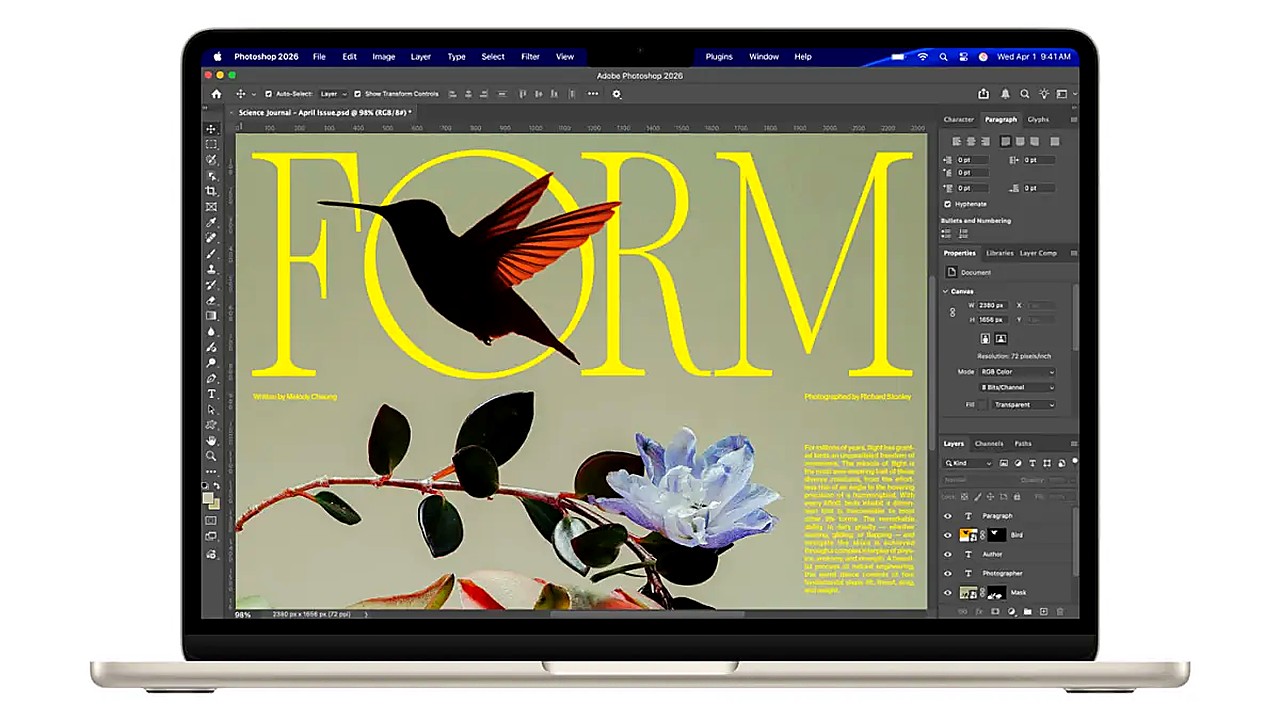
Apple on Monday unveiled a new MacBook Air powered by its M5 chip and an updated MacBook Pro lineup featuring M5 Pro and M5 Max processors, expanding the company’s latest generation of Apple silicon across its best-known laptop lines.
The announcements introduce an M5-based MacBook Air and a MacBook Pro family built around two higher-end variants, the M5 Pro and M5 Max. Apple’s updates target customers shopping for thinner, lighter laptops as well as professionals who need more performance in sustained workloads.
Apple said the new MacBook Air starts at $1,099 and includes 2x storage compared with the prior base configuration. The company positioned the M5 MacBook Air as its mainstream notebook option, with the M5 chip bringing Apple’s newest silicon to the Air line.
For the MacBook Pro, Apple introduced models using the M5 Pro and M5 Max chips. Apple described the processors as all-new and framed the MacBook Pro update as a performance-focused refresh aimed at demanding creative and technical tasks.
Several outlets covering the launch highlighted Apple’s emphasis on new chip design work. MacRumors reported the MacBook Pro update includes a “new Fusion architecture,” while HotHardware characterized the M5 Pro and M5 Max machines as designed to “supercharge on-device AI.” Apple’s own announcement centered on the arrival of the M5 Pro and M5 Max in the MacBook Pro line.
The updates matter because the MacBook Air and MacBook Pro make up the core of Apple’s laptop business, and chip transitions often shape performance, battery behavior, and buying decisions across the lineup. A higher default storage option in the entry MacBook Air also affects value comparisons for students, remote workers, and everyday users who want more capacity without stepping up to a higher tier.
For professional customers, the MacBook Pro’s move to M5 Pro and M5 Max signals Apple’s ongoing focus on higher-end configurations that prioritize throughput for intensive applications. That category includes workflows that depend on faster compute and memory performance, and it can influence purchasing cycles for creators, developers, and businesses standardizing on Apple laptops.
What happens next will be the practical rollout: customers will weigh the new MacBook Air’s starting price and increased base storage against older models still on the market, while power users will compare M5 Pro and M5 Max configurations to previous generations. Reviewers and enterprise IT teams will also begin validating performance claims and real-world behavior as systems reach stores and buyers.
Apple’s newest MacBook Air and MacBook Pro updates place the M5 generation at the center of its laptop lineup, setting the stage for the company’s next wave of Mac upgrades.