Knife Attack In Belfast Triggers Night Of Street Violence
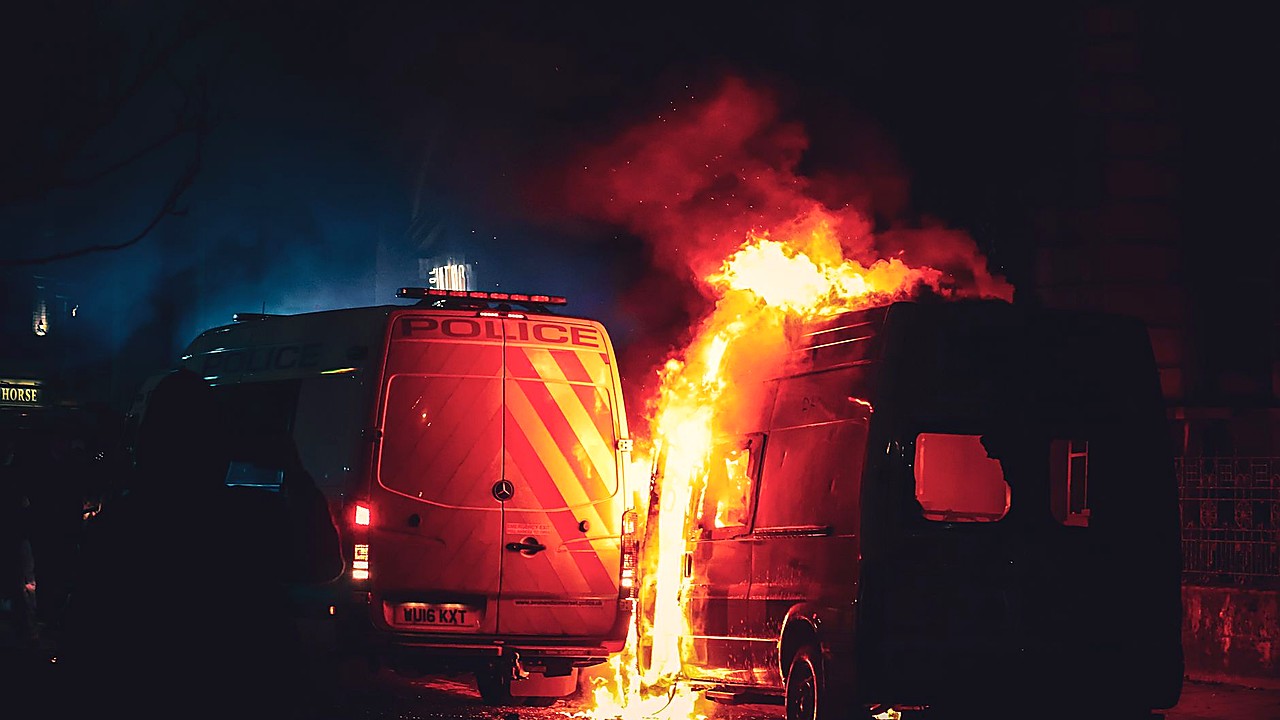
A knife attack in Belfast set off a night of violence that left streets damaged, police under pressure, and community leaders urging calm as unrest spread in Northern Ireland’s capital.
Authorities responded to disorder in Belfast following the stabbing, as crowds gathered and violence flared in the hours after the attack. News reports described homes and vehicles being set on fire and scenes of anti-immigrant hostility during the unrest. Police faced escalating disturbances as the situation moved from the initial incident into wider street violence.
The stabbing itself was the catalyst for the disorder, according to multiple reports. The victim’s family publicly appealed for calm, warning against using the attack “to fuel hostility,” as reported by Reuters and CBC. That plea came as tensions rose and demonstrations turned violent, with attacks on property and confrontations in the streets.
BBC reporting described water cannon being used during subsequent disorder. The use of such crowd-control measures underscored the scale of the unrest and the challenge for police trying to restore order in densely populated areas where residents were caught between fear, anger, and uncertainty.
The violence matters because it reflects how quickly a serious criminal incident can ignite broader public disorder, particularly when it becomes tied to immigration tensions. The reported targeting of homes and vehicles, and the description of anti-immigrant violence, raised concerns about public safety for residents and the potential for retaliatory attacks.
It also placed immediate pressure on law enforcement and local officials to prevent further escalation. The appearance of water cannon in policing operations, along with reports of fires and rioting, signaled a volatile situation that can strain emergency services and deepen divisions in communities already on edge.
In the near term, the focus remains on containing further disorder and maintaining security in affected neighborhoods. Police activity is expected to continue as authorities respond to evolving conditions on the ground and work to prevent additional violence. Officials and community figures have also emphasized de-escalation, with the victim’s family’s call for calm standing out as a direct appeal to residents not to channel outrage into hostility.
At the same time, the knife attack itself remains central to the story as the incident that preceded the unrest. As more verified information emerges about the circumstances of the stabbing and the subsequent events in Belfast, authorities will face scrutiny over both the criminal investigation and the public-order response.
For now, Belfast is confronting the aftermath of a stabbing that quickly spilled into a wider crisis, with residents and officials bracing for what comes next and urging the city to step back from the brink.