Vance Says U.S. Not Paying Iran as He Defends Trump Deal
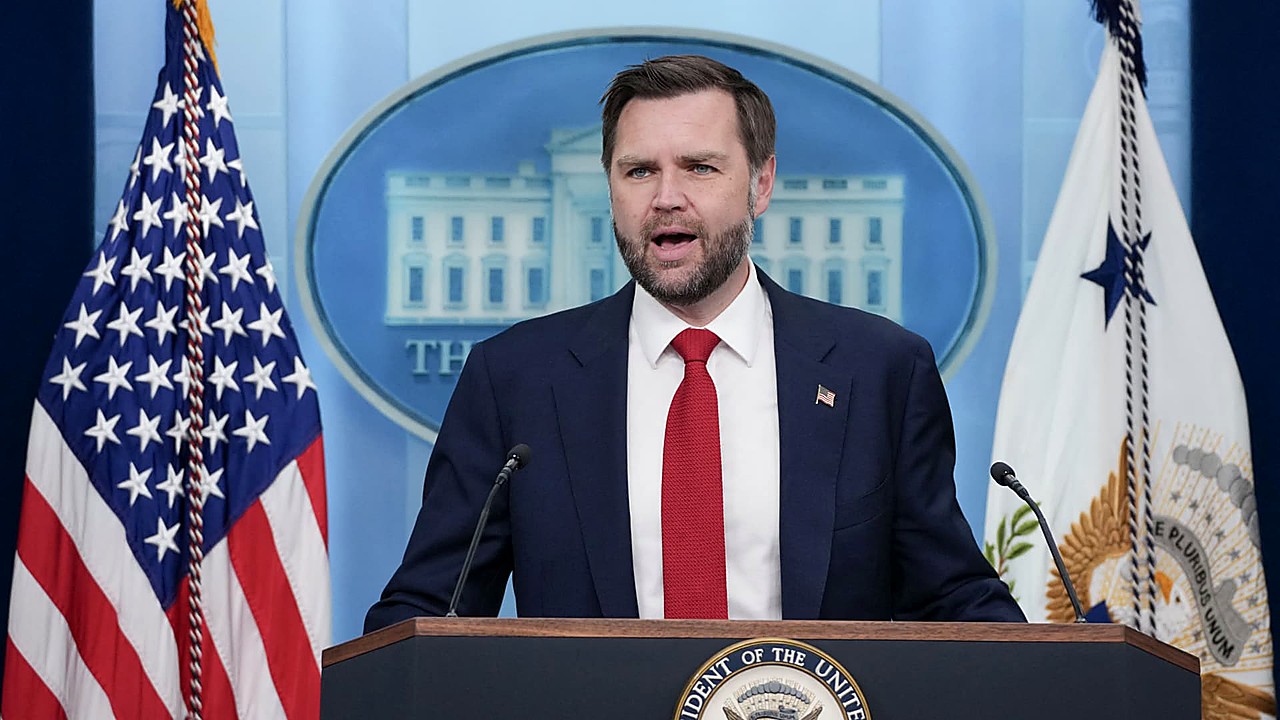
Sen. JD Vance said the United States is not giving Iran “a cent” as he defended President Donald Trump’s newly signed peace deal, pushing back on claims that the agreement involves U.S. payments to Tehran.
Vance’s comments came as questions continue to surround the U.S.-Iran deal that Trump formally signed, including unresolved concerns about Iran’s nuclear program and missile capabilities. Public debate over the agreement has intensified alongside competing accounts of what, if anything, the United States is committing financially.
In his remarks, Vance framed the agreement as a diplomatic achievement while arguing that it does not include direct American funds for Iran. He cast the deal as consistent with the administration’s approach to reducing conflict through negotiated arrangements rather than open-ended U.S. commitments.
The agreement is being discussed against a wider regional backdrop that includes separate statements from Iranian officials and reactions from Israel. Iran has said its deal with the United States requires Israeli forces to leave Lebanon, a demand that adds a major condition and underscores how much of the deal’s practical impact may hinge on actions beyond Washington and Tehran.
Other reporting has noted that both Iran and Israel have voiced caveats about the deal ahead of the expected signing ceremony, reflecting that the agreement’s terms and implementation are still subject to interpretation and political pressure. Even after the formal signing, key questions remain about enforcement and verification, particularly on issues tied to nuclear activity and missile development.
The financial dimension has become a central political flashpoint. Vance’s statement aims to draw a clear line: no direct U.S. money is being transferred to Iran. At the same time, coverage and commentary have highlighted lingering uncertainty about the agreement’s broader costs, including claims of large dollar figures associated with the deal, which some outlets have challenged or revisited.
The development matters because it touches multiple high-stakes issues at once: U.S. diplomacy in the Middle East, the future of Iran’s military capabilities, and the credibility of American commitments. The deal’s success or failure could shape regional security dynamics, influence U.S. relations with key allies, and become a defining point in domestic political debate.
It also matters because the agreement’s details will determine how durable it is. If critical provisions are unclear, disputed, or conditioned on third-party actions, the deal could face immediate obstacles. The administration’s ability to defend the agreement publicly will likely depend on whether it can provide specific answers about its terms, enforcement mechanisms, and what each side is required to do.
Next, attention will focus on the post-signing process: how the agreement will be carried out, how compliance will be assessed, and whether the outstanding questions about nuclear and missile issues are addressed in follow-on steps. Lawmakers and the public are also likely to scrutinize any future administration actions that could be interpreted as providing material support, even indirectly, to Iran.
For now, Vance is staking out a firm defense of the deal’s financial premise, setting up the next phase of debate over what the agreement actually requires and whether it can hold.