Trump Orders Navy To Shoot Mine-Laying Boats In Hormuz Strait
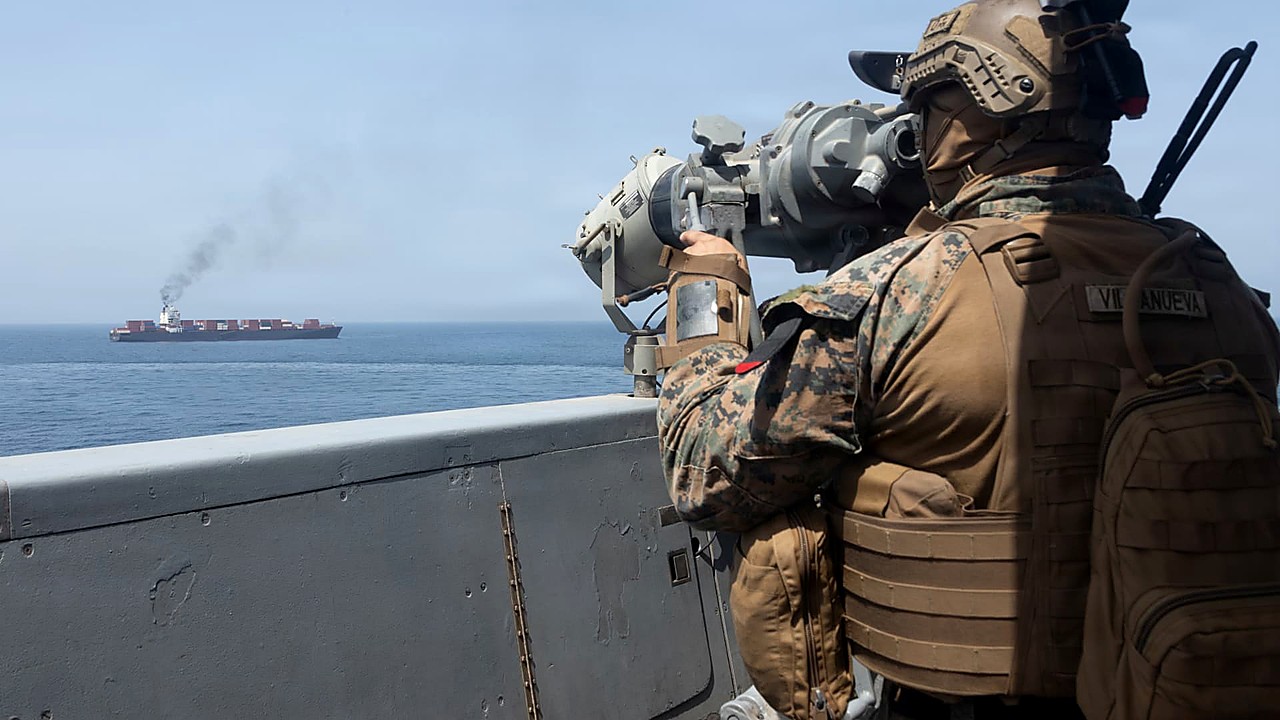
President Donald Trump said he ordered the U.S. Navy to “shoot and kill any boat” that is laying mines in the Strait of Hormuz, a critical waterway for global energy shipments. The directive, as described by Trump, targets any vessel caught placing explosive mines in the narrow passage at the mouth of the Persian Gulf.
Trump’s statement centers on mine-laying activity in the Strait of Hormuz, one of the world’s most strategically important maritime chokepoints. The strait is routinely transited by commercial cargo ships, oil tankers, and naval vessels, and any disruption there can have immediate implications for international shipping and regional security.
In describing the order, Trump specifically referenced boats laying mines and framed the instruction as a lethal response. Multiple news outlets reported the comment as an order to U.S. forces to engage such vessels with deadly force if they are observed planting mines in the waterway.
The Strait of Hormuz sits between Iran and Oman and serves as the main sea route from the Persian Gulf to the Gulf of Oman and the Arabian Sea. Because of its geography and heavy traffic, it is considered especially vulnerable to interference, including mining, which can threaten both military vessels and civilian ships.
The development matters because the use of naval mines in a confined, heavily traveled corridor can create immediate hazards and can also trigger broader security responses. A public declaration of rules for engagement in that environment also carries high stakes, given the presence of regional militaries and the volume of international commercial traffic that passes through the area.
It also signals an escalation in posture by the United States toward any suspected mine-laying operations in the strait. Such operations, if attempted, can be difficult to detect in real time and can require extensive mine-clearing work once mines are believed to be in the water.
What happens next will depend on how the Navy implements the instruction operationally, including how it identifies mine-laying activity, communicates warnings, and conducts interdictions in a congested maritime corridor. Any enforcement action would occur in an area where misidentification and rapid escalation are longstanding concerns for military commanders.
Further details about how the order would be carried out, including any formal guidance issued to commanders, were not included in the reports cited. Any confirmation from the Pentagon or U.S. Navy about specific operational changes would likely clarify the scope of the directive and how it aligns with existing maritime security missions in the region.
For now, Trump’s statement sets a hard line: any vessel caught laying mines in the Strait of Hormuz would face immediate, lethal force from the U.S. Navy.