Rhode Island Challenges Federal Travel Ban In Federal Court
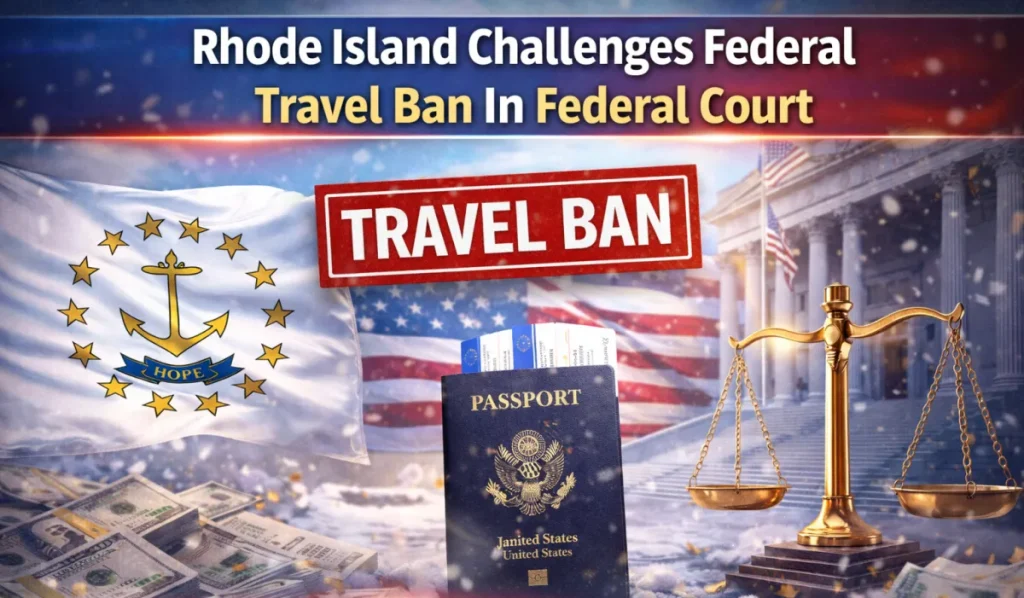
Rhode Island’s statewide travel ban remained in effect as a major blizzard hit the state, with Gov. Dan McKee keeping emergency restrictions in place amid intense snowfall and hazardous conditions.
The travel ban was issued statewide as part of a declared state of emergency, according to multiple Rhode Island news reports and local outlets. The order limits travel on public roads, a measure used during severe winter storms to reduce crashes, keep routes clear for plows and emergency vehicles, and support power restoration work where outages occur.
Local coverage described worsening conditions as snowfall intensified across the Northeast, with residents urged to stay off the roads while blizzard warnings and travel bans were in place. Reports also noted that the ban would remain active as the storm continued, and that state and local officials were providing ongoing updates on road conditions, snow totals, and outages.
Several outlets focused on what the travel ban means in practice and the consequences for ignoring it. Rhode Island media published the exact wording of the state’s travel ban and separate guidance describing what can happen if drivers do not adhere to the order. Those reports emphasized that the restriction is a formal statewide directive tied to the emergency declaration.
The blizzard drew additional attention in Rhode Island because of its historic intensity. One report described the “Blizzard of ’26” as surpassing the Blizzard of 1978 snowfall record, underscoring the scale of the event and the challenges facing transportation and public safety agencies during peak conditions.
The development matters because a statewide travel ban affects nearly every aspect of daily life, from commuting and deliveries to emergency response. During major storms, fewer vehicles on the road can lower the risk of crashes and allow plow crews to work more efficiently. It also helps first responders reach calls more quickly and reduces the likelihood that drivers will become stranded as visibility drops and drifts build.
For businesses, schools, and municipal services, a prolonged travel restriction can force closures, limit staffing, and delay normal operations well beyond the heaviest snowfall. For residents, it can mean planning for several days of limited mobility and staying prepared for changing weather, road conditions, and potential utility disruptions.
What happens next will depend on official updates from the state as conditions improve. Coverage indicated the travel ban would remain in effect, with Rhode Island residents advised to follow guidance as crews continue storm response and recovery. Officials typically lift travel restrictions once roads are passable and emergency operations can proceed safely, though timing can vary by region and conditions.
Until the ban is lifted, Rhode Islanders should expect continued restrictions on road travel statewide and a focus on safety and storm response as the blizzard runs its course.