Trump Seeks Supreme Court Rehearing In Birthright Citizenship Case
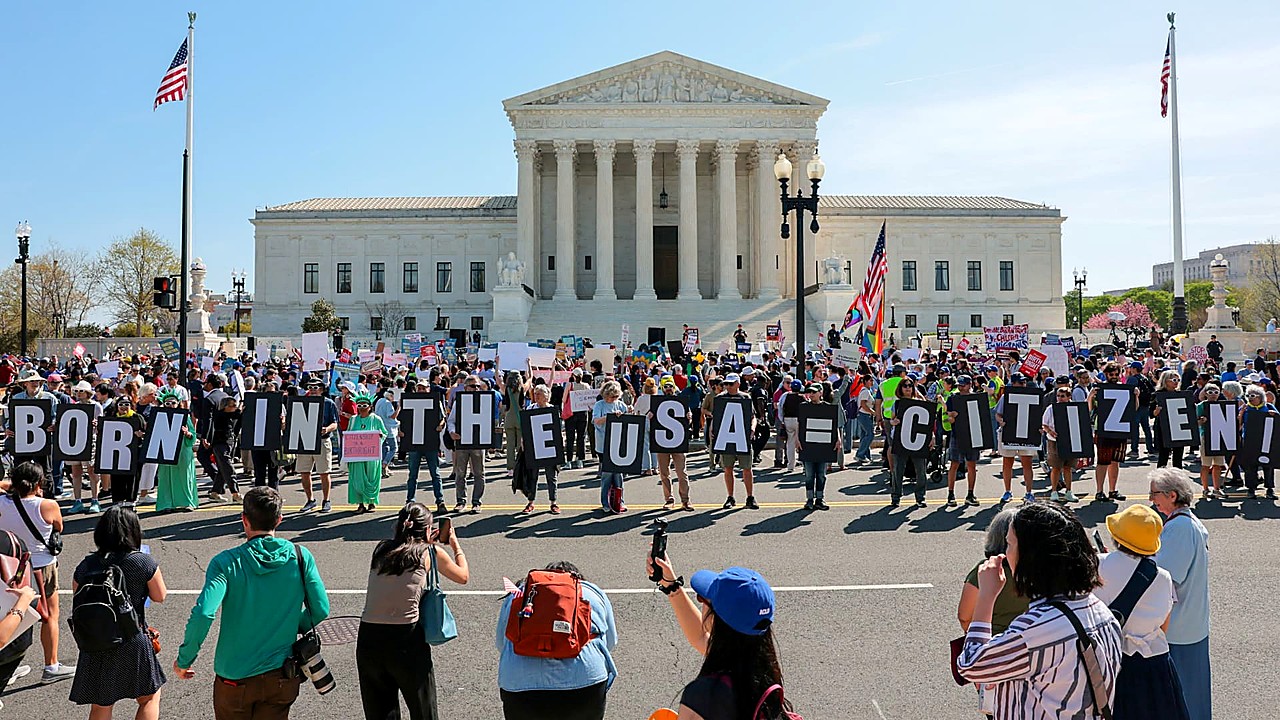
Former President Donald Trump announced a long-shot effort to ask the U.S. Supreme Court to rehear a birthright citizenship case, signaling a renewed push to revisit one of the most consequential constitutional questions in immigration law.
Trump made the announcement publicly, framing the move as an attempt to bring the issue back before the nation’s highest court. The bid centers on birthright citizenship, a principle tied to the 14th Amendment and long treated as guaranteeing U.S. citizenship to most people born on American soil.
The effort, as described in the announcement, would involve a request for the Supreme Court to take the unusual step of rehearing a case that has already been decided. Such rehearings are rare, and the Supreme Court has strict procedural rules and internal voting requirements for granting them.
The development matters because birthright citizenship is foundational to how the United States confers citizenship and defines who is an American at birth. Any successful attempt to reopen Supreme Court consideration of the issue would draw intense legal scrutiny, prompt rapid responses across the political spectrum, and potentially affect how federal and state governments administer citizenship documentation and related benefits.
Trump’s announcement also underscores how immigration and citizenship questions remain central to national politics, even when the pathway to a legal change is steep. A rehearing request—particularly on a constitutional issue—would place attention on the court’s willingness to revisit past decisions and on the legal arguments offered for doing so.
At this stage, the immediate focus shifts to the mechanics and viability of the request itself. A petition for rehearing must meet demanding standards, and the court has broad discretion to reject such bids without extensive public explanation. Any filing would be evaluated within the court’s established procedures and timelines.
The next steps depend on whether Trump and his legal team formally submit the rehearing request and, if so, what specific case and legal grounds are cited. If a petition is filed, other parties to the underlying case could respond, and the court would decide whether to take the extraordinary step of reopening the matter.
For now, Trump’s announcement puts birthright citizenship back in the legal and political spotlight, with the Supreme Court holding the decisive power over whether the case remains closed or returns to the docket.